Understand the contract
Learn the difference between spot, dated futures and perpetual contracts, including how orders, margin and liquidation work.
What are crypto perpetual futures?Compare exchange funding rates and standard trading fees. Use the calculators to estimate fees, funding payments and liquidation prices.
Learn the difference between spot, dated futures and perpetual contracts, including how orders, margin and liquidation work.
What are crypto perpetual futures?Compare entry and exit fees separately from funding. A referral reward is not necessarily a reduction in your trading fee.
Exchange comparison and worked exampleCheck where the data comes from, when it was collected and which contracts it covers. A missing value does not mean zero.
Data methodology and limitationsVIP 0 standard perpetual rates. Actual rates can vary by account, region, or market zone.
Standard USDT-M futures rates; actual rates vary by account level.
Estimate the liquidation price using leverage and the maintenance margin rate. The formula and assumptions are shown in the calculator.
Futures Fee CalculatorEstimate maker and taker fees using standard rates.
Funding Fee CalculatorCalculate funding payments from the position value and funding rate, including who pays and who receives.
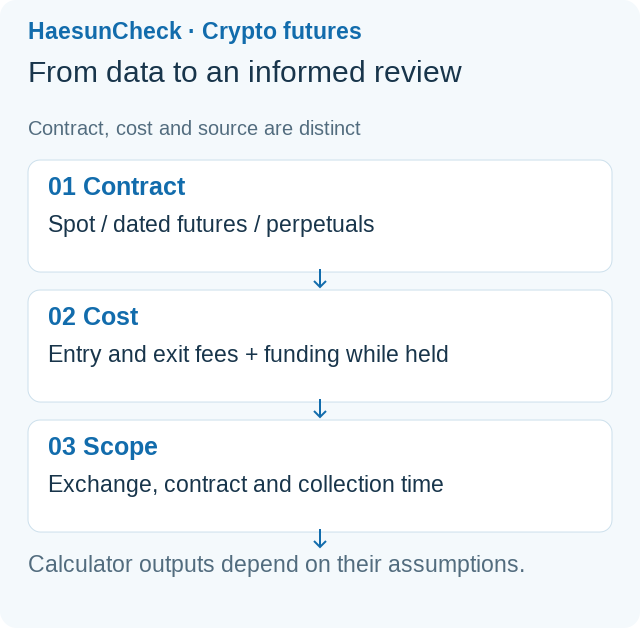
Follow the question you need to resolve: how links work, how codes apply, or how costs compare.
Understand crypto referral codes, personal invitation links and affiliate programs. Learn how fee discounts, cashback and signup rewards differ.
Check region, product, referral code and reward terms before signup. Understand exceptions for adding a code later and what to record if a benefit is missing.
Compare crypto referral programs using base fees, user benefits, referrer rewards and regional eligibility. Check official Binance, Bybit and Bitget documentation.
Connect the displayed numbers to execution rules and the limits of public calculations.
Understand futures order execution, post-only and reduce-only instructions. Check unfilled orders, taker fees and the difference between triggering and filling.
Compare isolated, cross and portfolio margin. Understand initial and maintenance requirements with a hypothetical calculation and account-specific limits.
Learn why chart and liquidation prices differ, why stops may not prevent liquidation, and how to investigate a liquidation using account records.